Concrete driveways fail in predictable ways. They crack at control joints that were never cut, scale under winter salt, spall at the edges where the subgrade sank, or ravel because the finishers closed the surface too early. Underneath most of those failures is a choice about mix strength and placement. Concrete PSI sounds like a spec line, but it governs how the driveway places, cures, resists freeze-thaw, and carries loads from the first cement truck to the twentieth winter.
I have ordered and placed concrete for driveways in different climates and soil conditions. The reads on the slump cone, the look of the paste on the trowel, the way a joint saw behaves at hour eight, they all tell a story about whether the mix strength matches the project. This guide connects those tactile details to the numbers on the ticket, and shows how to select, place, and protect a slab that will last.
What PSI Really Means for a Concrete Driveway
PSI, short for pounds per square inch, measures compressive strength. A 3,500 PSI mix, tested at 28 days, survived that amount of compressive load before failure. Driveways rarely fail in pure compression, but compressive strength correlates with other properties that matter: paste quality, permeability, and overall durability. Higher PSI mixes are generally denser and less permeable, which reduces water ingress and freeze-thaw damage. They also carry higher internal stresses as they shrink, which can create cracks if joints and curing are handled poorly.
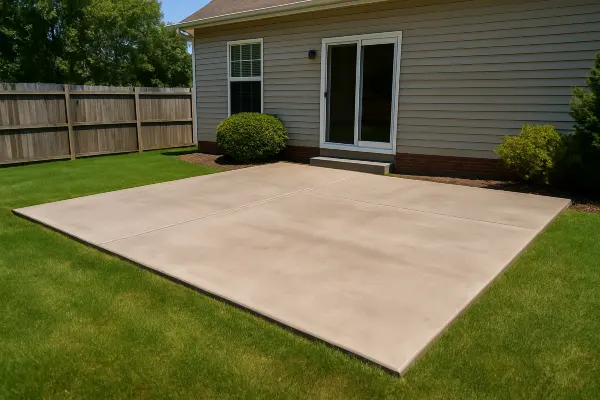
For context, most residential concrete driveways are placed between 3,000 and 5,000 PSI. The right number depends on climate, soil, thickness, reinforcement, finishing practices, and the type of vehicles that will use the slab. A 3,000 PSI driveway on sand in a warm region with passenger cars might last decades. The same mix in a cold climate with deicing salts, on weak clay, and with heavy pickup trucks, is asking for trouble.
Matching Mix Strength to Climate
Freeze-thaw cycles drive many mix decisions. Water that penetrates the surface and freezes can expand and pop off the top layer, a failure called scaling. A denser, higher PSI mix lowers permeability and resists scaling better. Air entrainment adds a network of microscopic bubbles that relieve internal pressures from freezing water. These two choices, PSI and air content, work together.
In cold regions, most concrete driveways should be air entrained to roughly 5 to 7 percent by volume for a 3/4 inch aggregate. Higher PSI, often 4,000 or more, protects against scaling under deicing salts. In moderate climates that rarely dip below freezing, 3,500 PSI without air entrainment can perform well, though many ready-mix producers still include some air. Hot, arid climates benefit from mixes adjusted for slower set, controlled slump, and tight curing, so they do not dry out too fast and craze.
A rule of thumb that has served me: if you see road salt in winter, spec air entrainment and move the base mix from 3,500 up to 4,000 PSI. If you are coastal with mild winters, 3,500 PSI with good curing and joints is usually enough.
Subgrade, Thickness, and Why PSI Is Not a Band-Aid
The best mix cannot save a slab that floats over mush. A driveway transfers load to the ground through its thickness and contact area. Weak or inconsistent subgrade lets the slab bend more and crack, especially at edges and at mid-panel under axle loads. People sometimes try to solve subgrade problems with a higher PSI number. That rarely works.
Proper sitework matters more than almost anything:
- Remove organic soil and roots, then compact a uniform base of crushed stone or gravel. Four inches is the bare minimum in fair soils. Six inches or more helps in softer soils or for heavier vehicles. Plan slab thickness for loads. Four inches works for passenger cars. Five inches adds margin, especially where a trailer or work van will turn. Six inches is smart at the apron near the street where trucks may cross. Manage water before hitting the forms. Stable subgrade wants drainage. Pitch away from structures, add a compacted base with fines that lock in, and avoid pumping water up through weak spots.
Notice the order. Subgrade, thickness, then PSI. Mix strength is the third lever, not the first.
Rebar, Wire Mesh, and Fiber: How Reinforcement Interacts with PSI
Concrete fails in tension before compression. Reinforcement holds cracks tight and spreads loads, but it does not stop all cracking. The joint layout and curing control where cracks happen. Reinforcement shapes how they behave.
Welded wire reinforcement in sheets or rolls helps control micro-cracking and supports the slab across soft spots. It only works when it sits in the top third of the slab. Too often it sinks to the bottom during placement and does almost nothing. Rebar grids, set on chairs at 18 to 24 inch spacing, cost more but control cracks better, especially on five to six inch slabs.
Synthetic fibers in the mix reduce plastic shrinkage cracks at the surface. Microfibers help early, macrofibers add some post-crack toughness. Fibers do not replace steel if you need structural capacity, but they reduce curling and raveling and are worth the upcharge in many climates.
As PSI rises, the concrete tends to shrink a bit more and gains strength faster. Reinforcement keeps that energy from creating random, wide cracks. A balanced system might be a 4,000 PSI, air-entrained mix with microfibers, a five inch thickness, and a rebar grid near the top third, tied and chaired properly. The rebar is the insurance, the PSI is the weathercoat, and the joints are the steering wheel.
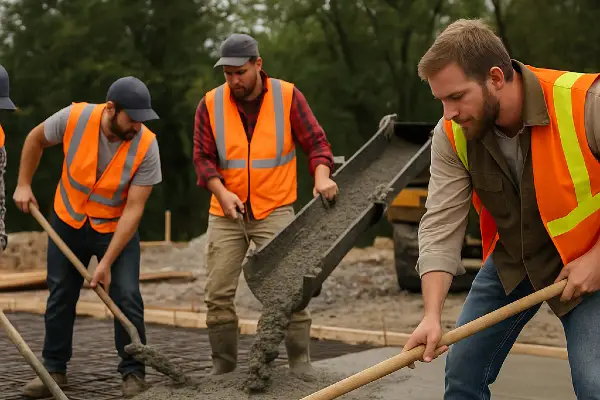
Order It Right: Slump, Aggregates, and the Ticket
Your choices start at the time you call the plant. The cement truck will bring exactly what you ask for plus what the dispatcher thinks you need if you are vague. A clear order prevents the most common on-site argument: adding water for workability at the cost of strength and durability.
Ask for a mix by PSI, air content, and slump target. In cold regions with freeze-thaw, I call for 4,000 PSI with 5 to 7 percent air and a target slump of 4 inches. If the crew wants a looser mix for hand placement, use a mid-range water reducer rather than water. Most ready-mix producers carry admixtures that improve workability without hurting strength.
Aggregate size matters. A 3/4 inch top size aggregate gives a good balance between strength and finishability. Pea gravel mixes place easily and pump well, but can shrink more and crack more if the paste content runs high. If you plan to stamp or expose aggregate, tell the plant. Surface finishes change how you finish and cure, and admixtures for set control might need adjusting.
When the truck arrives, read the ticket. Verify PSI, air entrainment, admixtures, and batched water. If you see add-water numbers rising on the ticket, slow down and reassess placement practices. Small water additions can be okay to regain slump lost to haul time, but they must stay within the designed water-cement ratio. A good Concrete Contractor trains the crew to ask for plasticizers rather than the hose.
Placing and Finishing: Speed, Timing, and the Temptation to Overwork
Driveways are large enough that set timing will vary under sun and shade. One corner stiffens while the other still bleeds. Overworking a surface that is still bleeding brings fines to the top and traps water, weakening the top layer. This shows up a year later as scaling under salt. It looks like the wrong PSI, but it is a finishing error.
Stay on the following practices:
- Strike off and bull float just enough to level. Watch for bleed water. Do not trowel or broom until sheen disappears. Edge and joint at the right time. Too early and they slump, too late and they tear. A fingertip press that leaves a 1/4 inch imprint is a good indicator for a broom finish. Avoid steel trowel finishes for exterior driveways in freeze-thaw climates. A lightly broomed surface gives traction and lets water escape. On decorative sections, plan for increased curing diligence. Keep the slump consistent across loads. If one truck is wetter, you will fight a patchwork of set times and strength variation.
The right Concrete Tools help keep the schedule without shortcuts: magnesium bull floats, groovers sized for the slab thickness, a reliable joint saw with an early-entry blade for same-day cuts, and a curing sprayer that covers evenly.
Joints: Where Strength and Movement Meet
Concrete shrinks as it cures. Those stresses need a release. Control joints steer cracks exactly where you want them. The spacing ties back to slab thickness: a common guideline is two to three times the slab thickness in feet. A four inch slab wants joints every 8 to 12 feet. Panels should be as close to square as the layout allows. Long, narrow panels are crack magnets no matter the PSI.
Joint depth matters more than many realize. Cut to at least one quarter of the slab thickness. On a four inch driveway, that means a one inch minimum cut, better at 1.25 inches. Early-entry saws let you cut within hours, which helps prevent random cracking overnight. There is a sweet window: too early and paste raveling ruins the edges, too late and the slab cracks before the saw gets there.
Higher PSI mixes often set faster, especially on hot, windy days. Plan the joint cutting schedule to match. I once watched a 4,500 PSI mix on a July afternoon crack at dusk because the crew assumed a morning saw cut would suffice. We had to chase and seal random cracks the next day. It looked like a mix issue to the owner, but it was timing.
Curing: The Unseen Half of Strength
PSI at 28 days assumes lab conditions. Field concrete gains that strength only when it stays moist and at a reasonable temperature. Without curing, the top quarter inch dries out, the hydration stalls, and you lose surface strength and durability. That shows up as dusting, micro-cracks, and scale under deicers. It is the most common gap between the specified PSI and the driveway you get.
For plain broom finishes, a curing compound applied within minutes of final brooming is an easy, effective method. White-pigmented compounds help in summer by reflecting heat. In cooler months or for higher-end decorative work, wet curing with blankets or soaker hoses for 3 to 7 days can significantly increase surface strength. Many contractors split the difference: curing compound immediately, then cover the first night to slow evaporative losses.
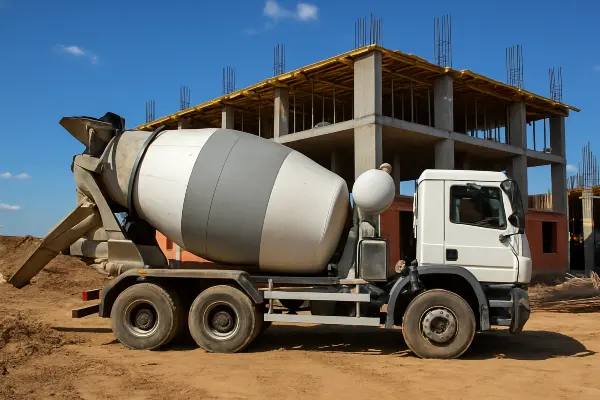
Hot weather calls for wind breaks, shade, and scheduling pours early in the morning. Cold weather demands protection from freezing. Concrete that freezes in the first 24 to 48 hours loses a frightening amount of strength. Heated blankets or enclosures keep it safe. A 4,000 PSI air-entrained mix that never got a proper cure will underperform a well-cured 3,500 PSI mix almost every time.
Deicing Salts, Air Entrainment, and Surface Life
Deicing chemicals accelerate scaling on young concrete. Avoid salt on a new driveway for the first winter if you can. A sand blend provides traction without chemical attack. The air-entrained, higher PSI mix reduces salt damage but does not make the surface invincible. The first weeks after placement are the most sensitive. Keep heavy vehicles off for at least seven days, longer when temperatures are low.
Some homeowners seal driveways to fight salts. Penetrating silane or siloxane sealers reduce water uptake without creating a film. They work best on a clean, fully cured surface, often at 28 days or later. Film-forming sealers can make driveways slick and trap moisture. If you use them, choose a breathable product and reapply per manufacturer guidance.
The Load Question: What Will Drive on This Slab?
Vehicle types inform PSI and thickness choices. Daily passenger car traffic is not the same as a heavy pickup with a plow, or a loaded box truck. The pad near the garage often sees concentrated point loads as vehicles turn and stop. The apron at the street edge takes the beating from delivery trucks. Thickening those zones by an inch or two is smart. If a motorhome or small RV will park regularly, increase thickness to at least five inches, consider six, and use a higher PSI mix with proper reinforcement.
Remember that compressive strength is one piece. The combination of thickness, reinforcement, joint layout, and curing governs how the slab handles bending stresses and thermal movement. If you push the slab with heavier loads, address all four.
Decorative Finishes and How They Change the Equation
Stamped concrete needs a workable mix that takes imprint without tearing the surface. That often means a slightly higher slump with a mid-range plasticizer and a careful watch on set time. Most finishers prefer 4,000 PSI or more for stamped work in freeze-thaw climates, plus air entrainment and meticulous curing. The release agents used in stamping can interfere with curing compounds, so you must clean and then cure. If a film sealer is part of the system, use one designed for freeze-thaw and deicer exposure.
Exposed aggregate finishes rely on washing off the paste to reveal stone. This exposes the concrete matrix to the environment and magnifies the role of curing and air content. A 4,000 PSI, air-entrained mix with rounded aggregates produces a durable, clean-looking surface that holds up to winter if cured well.
Colored concrete slightly reduces tolerance for patch repairs. If random cracks form because joints were missed, the fix will show. A higher PSI mix reduces permeability and helps color last, but it cannot mask finishing or curing errors.
Cost, Value, and Where to Spend
Higher PSI mixes cost more. In many markets, moving from 3,500 to 4,000 PSI adds a small bump per cubic yard. On a typical 600 square foot driveway at five inches thick, that might add a few hundred dollars. Upgrading to six inches of concrete adds more material and labor cost. Rebar, fiber, and admixtures add incremental costs.
The right spending order for most driveways looks like this: invest first in subgrade preparation and thickness where loads are highest. Next, add air entrainment and adequate PSI for the climate. Third, specify reinforcement that stays in the right location. Finally, budget time and materials for curing and early saw cuts. Decorative options come last, after durability needs are met.
A competent Concrete Contractor will walk through those trade-offs before a shovel hits the ground. The cheapest bid often drops dollars where the owner cannot see them: base prep, reinforcement, and curing. A careful reading of the proposal reveals whether they plan to saw joints same day, use curing compound, or chair the steel. Ask to see the mix design or at least the target PSI and air content. Check the planned slump and how they intend to maintain it without extra water. If you hear “we will add a little water if it gets tight,” push for a water reducer.
What Can Go Wrong With the Wrong PSI
When PSI is too low for the exposure, the surface scales sooner, especially under salt. Tire tracks appear as roughened paths after the first winter. The edges crumble where vehicles roll off. If the PSI is too high for the finishing approach and weather, the crew may add water, which then undercuts the benefit. Higher PSI mixes can set faster, so the joint saw arrives too late and random cracks form. Stronger mixes can also curl more overnight if the top dries faster than the bottom. That curl creates hairline cracks at panel centers under daytime loads.
These pitfalls are manageable. Plan the pour time to match temperature, order the right admixtures, watch the bleed, cut the joints on schedule, and cure steadily. If a cold front arrives, delay the pour rather than pushing a marginal day.
A Practical Baseline for Most Homes
For a typical Concrete Driveway in a cold climate with cars and light trucks:
- Subgrade: remove organics, place 6 inches of compacted, well-graded crushed stone. Thickness: five inches throughout, six inches at the apron and heavy-turn zones. Mix: 4,000 PSI, air entrained to 5 to 7 percent, 3/4 inch aggregate, target slump near 4 inches with mid-range water reducer as needed. Reinforcement: #3 or #4 rebar at 18 inches each way on chairs in the upper third, with microfibers in the mix for plastic shrinkage control. Joints: panels 8 to 10 feet, cuts at one quarter depth minimum, same-day early-entry saw or next-morning conventional saw based on set. Finish and cure: light broom finish, curing compound applied immediately, protection from deicer use the first winter if possible.
In a warm, dry climate, you might drop to 3,500 PSI without air, keep the thickness and joints, add evaporation retardant on windy days, and commit to water curing because the sun will pull moisture out faster than you expect.
What to Watch On Pour Day
Owners do not need to micromanage the crew, but a few observations help. Look at the cement truck ticket when it arrives. You should see the specified PSI and whether air entrainment is included. Ask which admixtures are in use. Watch whether the crew sprays curing compound before packing up. Stand back when the saw comes out and note if cuts are aligned with the layout you discussed. These simple checks keep everyone honest and signal that quality matters.
I keep a small infrared thermometer on hot days to gauge slab surface temperature and a pocket hygrometer for ambient conditions. If the surface hits triple digits in direct sun with wind, I expect faster set and increased risk of plastic shrinkage cracking. That means an extra hand on the joint saw and a plan for evaporation control. None of that replaces judgment, but it helps make good calls in the moment.
When Repairs Are Needed
Even well-built slabs can crack. Hairline cracks that stay tight and do not telegraph movement often need no repair beyond sealing for water resistance. Wider cracks can be routed and sealed with flexible urethane to prevent water and incompressibles from entering. Scaling in isolated zones can be addressed with polymer-modified overlays, but prevention is cheaper and cleaner than repair.
If the driveway suffers early, widespread scaling, investigate the mix, finishing, and curing records. Labs can test core samples for air content and strength. Sometimes the mix lacked air entrainment or took too much water. Other times a storm rolled in as the surface was being finished. Assign cause before choosing a fix, because overlays and sealers that do not address the root problem have short lives.
Final Judgment on PSI: A Number With Context
Concrete PSI is not magic. It is one parameter in a system. The right number for a driveway lives inside your climate, soil, expected loads, finish, and the discipline of the crew. Too low, and the surface erodes early. Too high with poor practices, and you can still end up with random cracks and surface issues. A balanced specification, enforced on site with careful placement, jointing, and curing, delivers the driveway that feels solid underfoot in August and resists the grinder of winter.
Talk with your Concrete Contractor about the whole system. Ask for the mix strength and air content that match your https://gravatar.com/delicatelysecret642c4cdd66 exposure, insist on a water reducer instead of extra water, verify the joint plan, and make curing non-negotiable. The right Concrete Tools in the hands of a patient crew, fed by a properly batched cement truck, will turn that PSI on paper into a driveway that stays quiet under your tires for years.
Name: San Antonio Concrete Contractor
Address: 4814 West Ave, San Antonio, TX 78213
Phone: (210) 405-7125
This is the logo of San Antonio Concrete Contractor https://sanantonioconcretecontractor.net/assets/san-antonio-concrete-contractor-san-antonio-tx-logo.png
San Antonio Concrete Contractor is a local business located at 4814 West Ave, San Antonio, TX 78213
San Antonio Concrete Contractor serves consumers with residential and commercial concrete projects
San Antonio Concrete Contractor offers free quotes and assessment
San Antonio Concrete Contractor phone number is (210) 405-7125
San Antonio Concrete Contractor has the following website https://sanantonioconcretecontractor.net/
San Antonio Concrete Contractor has the following google map listing https://share.google/d8wsdJhNohh11Oyi5
San Antonio Concrete Contractor has this Facebook page https://www.facebook.com/profile.php?id=61581404267593
San Antonio Concrete Contractor has this twitter profile https://x.com/SanAntConcContr
San Antonio Concrete Contractor has this Pinterest profile https://www.pinterest.com/SanAntonioConcreteContractor/
San Antonio Concrete Contractor has the following Linkedin page https://www.linkedin.com/in/san-antonio-concrete-contractor-846606388/
San Antonio Concrete Contractor has this Youtube channel https://www.youtube.com/@SanAntonioConcreteContractor
San Antonio Concrete Contractor serves residents near Thomas Jefferson High School
San Antonio Concrete Contractor provides services near The Alamo.
San Antonio Concrete Contractor helps residents close to San Antonio Police Department at 3635 E Houston St, San Antonio, TX 78219